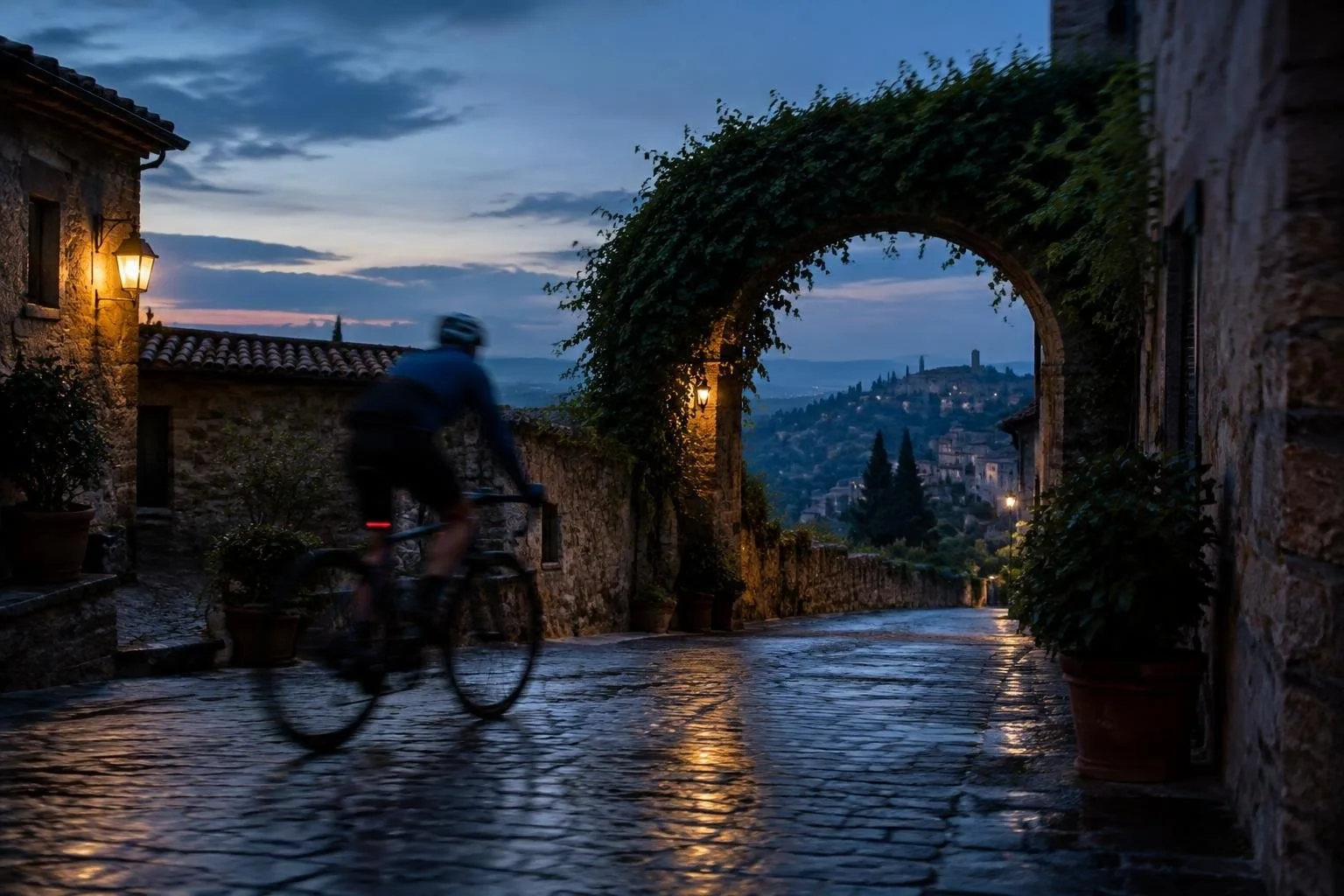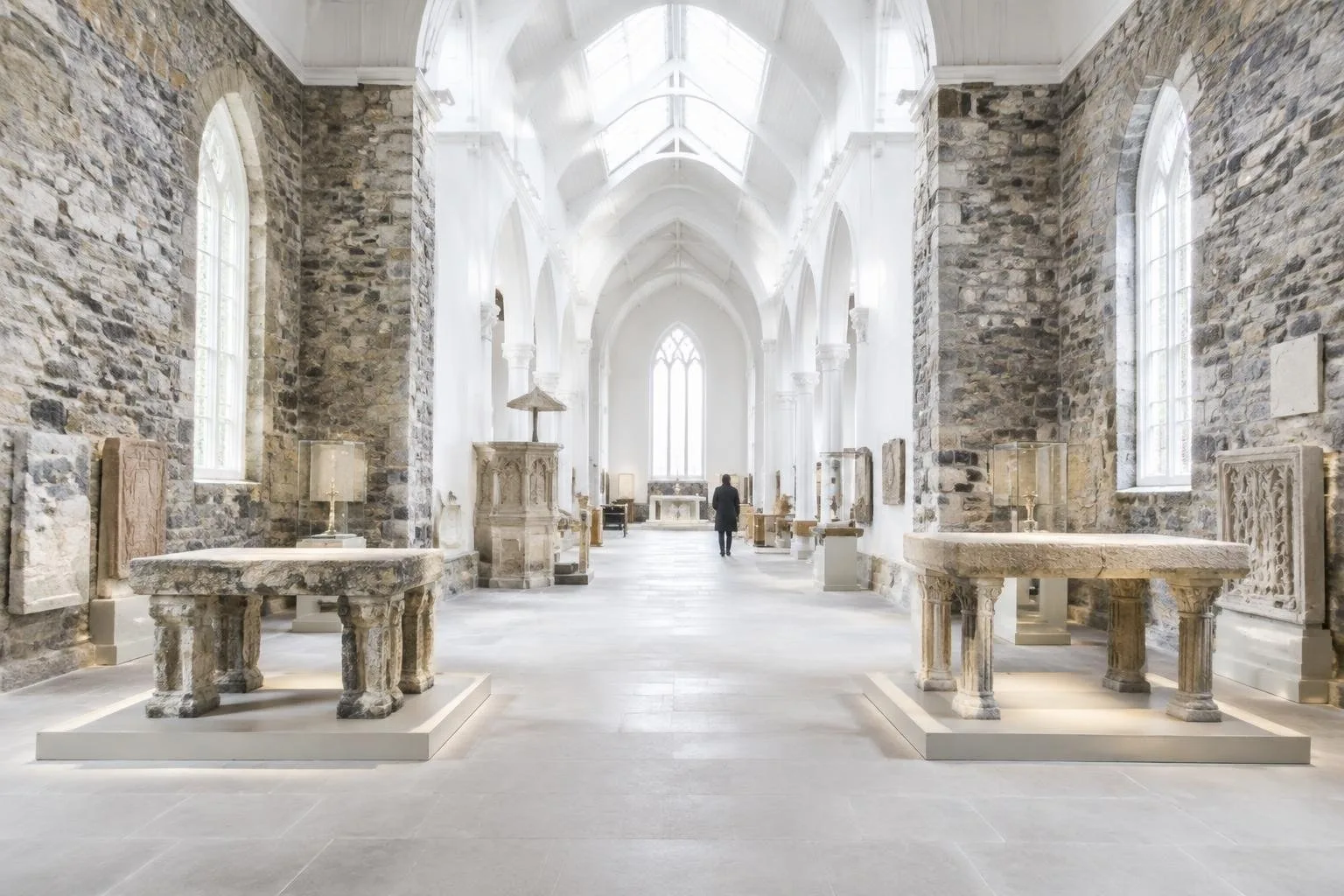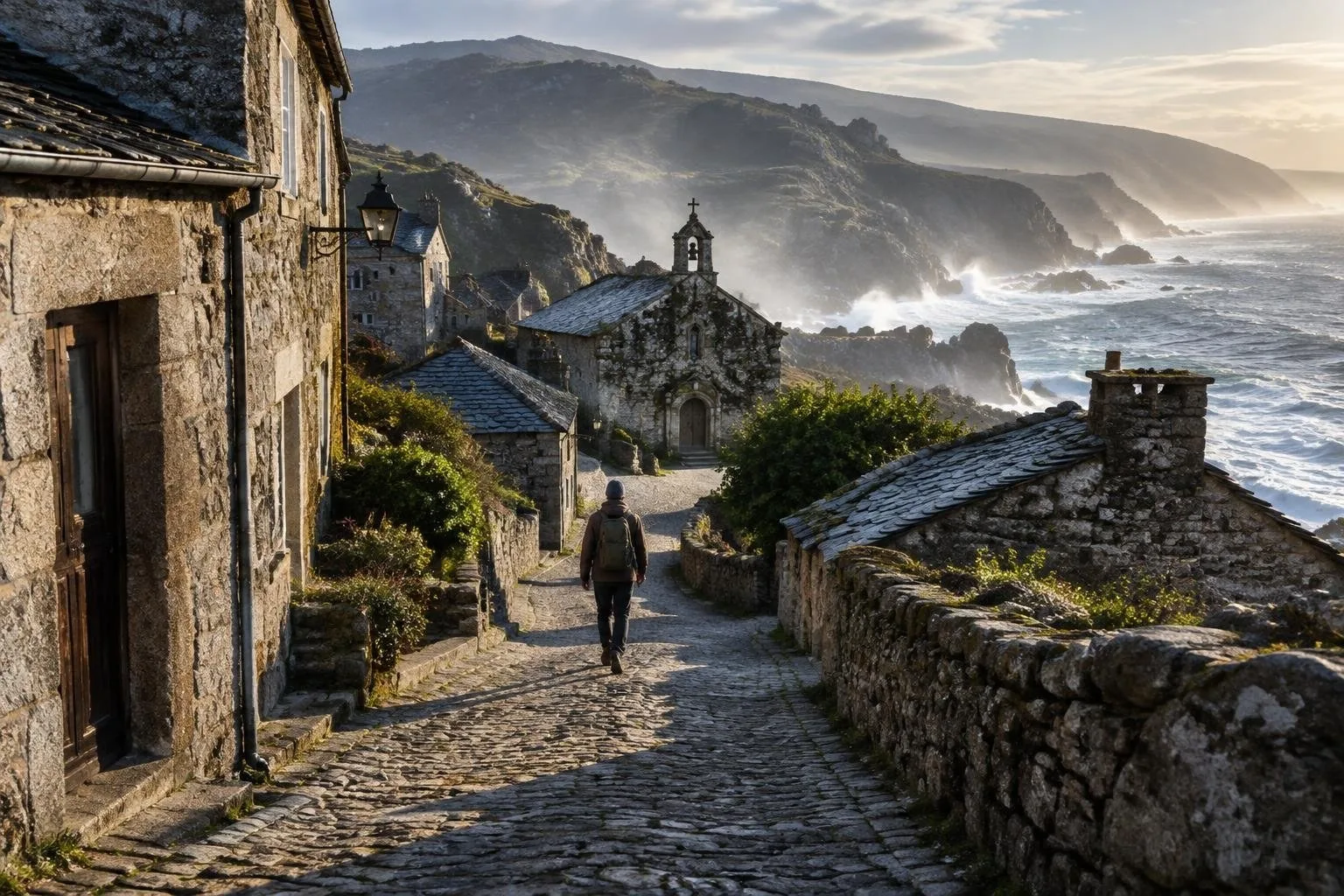
The visual world of a true crime production often does more than illustrate a story; it places the audience inside the environment where the events supposedly unfolded. Netflix’s three-episode miniseries Delitto in Galizia, launched on 13 November 2026, follows that principle by using the rugged coastline, medieval streets and pilgrimage pathways of northern Spain as a striking counterpoint to the violence at its core.
What the series portrays
The narrative follows a seemingly ordinary couple, Aniceto and Irene, who live in a small Galician village. One night Irene is brutally attacked inside their home; Aniceto claims two fleeing thieves were responsible. Sergeant Elias Lago, played by Tristán Ulloa, doubts the husband’s version and begins to piece together evidence that points back to him. As Irene lies in intensive care, the investigation forces the sergeant to confront professional uncertainty and personal doubt. Directed by Carlos Sedes and produced by Bambú Producciones, the drama concentrates on the tension between duty and doubt.
Filming across Galicia
The production chose authentic Galician settings rather than studio recreations, allowing viewers to experience the region’s contrast between historic serenity and modern intrigue. Locations span lively urban centers, renowned seaside resorts and centuries-old pilgrimage sites, each contributing a layer of atmosphere to the story.
Verín and the Pazos district
The real crime that inspired the series occurred in Verín, a town in the province of Ourense noted for one of Galicia’s largest medieval castles. Although the series does not film directly in the town or its picturesque Pazos hamlet, the decision to rename the place underscores the dramatized nature of the retelling. The surrounding countryside provides the weather-beaten backdrop that mirrors the narrative’s bleak tone.
Betanzos: stone alleys and civic landmarks
Betanzos serves as the visual heart of the miniseries. Its historic centre, with narrow stone streets and well-preserved medieval façades, appears repeatedly on screen. Recognizable structures include the Casa Consistorial, the Centro Internacional de Estampa Contemporánea (CIEC), the old Ponte Vella over the Mandeo River, and the distinctive neighbourhood of A Cañota. The town’s location on the famed Camino de Santiago adds a layer of pilgrimage symbolism to the visual narrative.
Ourense and Santiago de Compostela
Ourense, one of the largest municipalities in the area, is highlighted for its thermal springs and the nickname “city on water,” reflecting its river-lined geography. Meanwhile, Santiago de Compostela, the ultimate destination for pilgrims on the Camino, appears in establishing shots that emphasize the region’s spiritual heritage. Both sites contribute to the series’ juxtaposition of solemn tradition against contemporary criminal investigation.
A Coruña’s coastal splendor
Scenes filmed near A Coruña showcase the province’s maritime identity. The city is home to the historic Roman lighthouse known as the Tower of Hercules, still operating and recognized as the world’s oldest working lighthouse. Sweeping ocean vistas and rugged cliffs provide a dramatic visual counterpoint to the interior drama, reinforcing the series’ theme of beauty masking darkness.
By weaving together these diverse locales, Delitto in Galizia illustrates the paradox often found in true-crime storytelling: the stark brutality of the plot set against the outward charm of its setting. The series invites viewers to explore Galicia not only as a backdrop but as a character in its own right, offering a travel-inspired glimpse into a region where history, pilgrimage and coastal allure coexist with a modern, unsettling mystery.