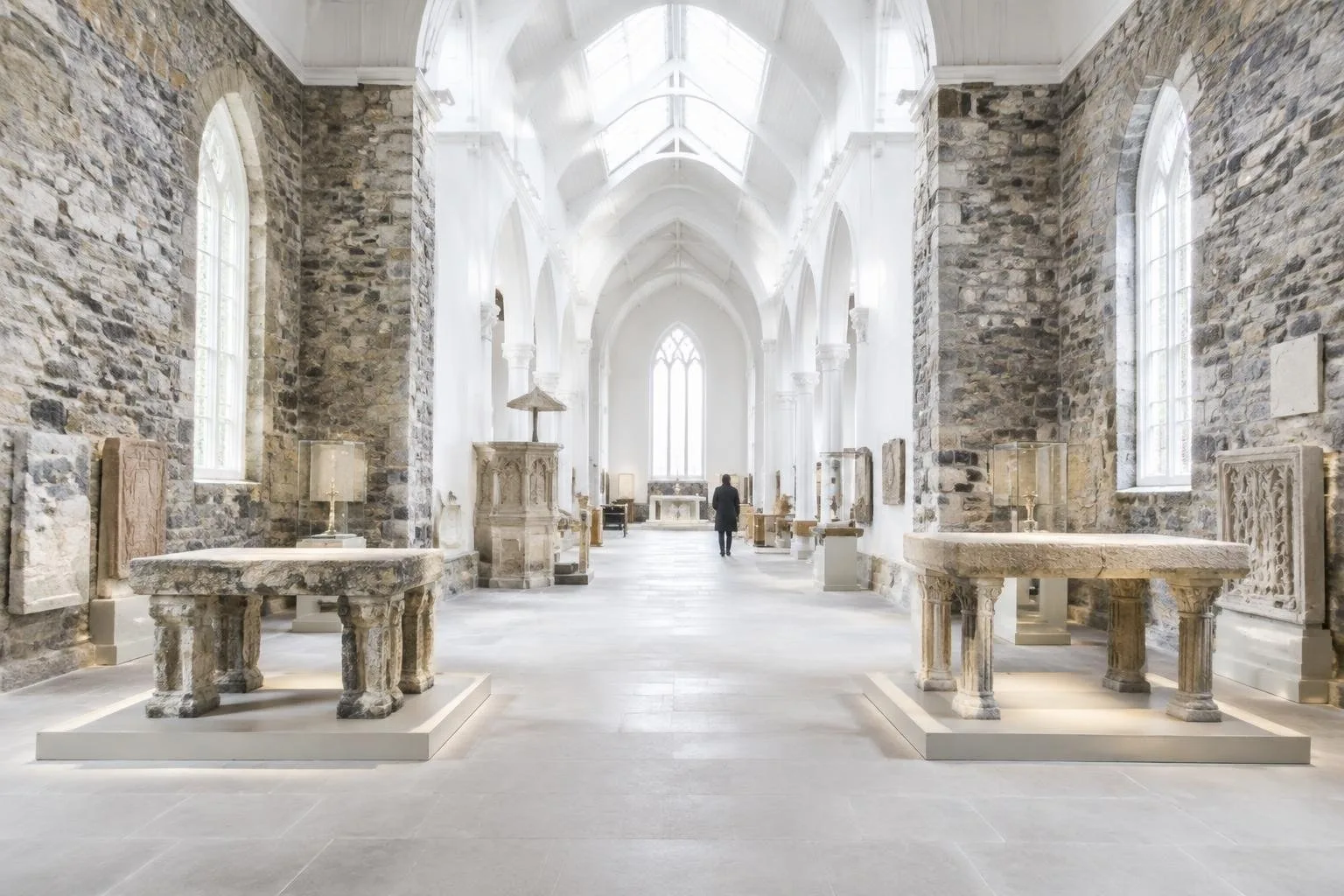
The former St. Patrick’s Church Museum occupies a prominent spot on Esplanade Street in the North End of Sydney, Nova Scotia. It is the oldest surviving Catholic house of worship on Cape Breton Island, and its stone façade now shelters a collection that chronicles the town’s cultural lineage. Visitors who enter are immediately confronted with the juxtaposition of a dignified 19th-century sanctuary and the subtle, unsettling traces of lives once buried beneath its floorboards.
Operated by the Old Sydney Society, the museum opens seasonally and offers a compact historic cemetery adjacent to the building. The oldest extant gravestone dates to 1798, predating even the first wooden chapel that once stood on the site. While the museum presents artifacts and interpretive displays, it also nurtures a reputation for paranormal activity, a reputation that draws both history buffs and curiosity-seekers alike.
From a garrison’s private plot to a community chapel (1785-1805)
In 1785, Captain John Butler Wilson arrived as the inaugural commander of the Sydney Garrison. Though a staunch Anglican, his wife, Margaret Coverly, was a devout Irish Catholic. When their infant son died, the couple faced a dire dilemma: Sydney possessed no legally recognized Catholic cemetery, and prevailing statutes barred Catholic landownership and worship. Determined, Wilson purchased a modest parcel of ground, and Margaret enlisted Father Henry McKeagney to consecrate the soil and perform Catholic burial rites for their child.
Ten years later, in 1805, the Wilsons erected a modest wooden chapel on the consecrated plot, offering a sanctuary for the fledgling Catholic community. This humble structure symbolised both personal devotion and the broader desire of Irish settlers to practice their faith despite official constraints.
Stone sanctuary, hidden graves, and a 1960s revelation
Captain Wilson died in 1823 and was laid to rest beside his infant son, their graves concealed beneath the very ground that would later become the church’s foundation. As the Catholic population expanded, the wooden chapel was superseded by a larger stone edifice, deliberately constructed over the original burial site. The new building served the faithful continuously until the 1960s, when attendance waned and the structure faced possible demolition.
In 1966 the Old Sydney Society undertook a careful restoration. Workers lifting the floorboards uncovered the skeletal remains of Captain Wilson and seven additional individuals, all interred long before the stone walls rose. All bodies, except Wilson’s—who had remained Anglican—were re-buried with full Catholic rites, honoring the very traditions the original chapel had sought to protect.
Legends that linger: museum, mysteries, and the red bell
Today, the former church functions as a museum dedicated to preserving Sydney’s layered heritage. Aside from the historic gravestones, the interior showcases a red bell rescued from the old Market House; local lore claims that ringing the bell three times will cause the upstairs door to the belfry to swing open of its own accord. Staff members have reported inexplicable footsteps, distant whispers, and an unseen hand that steadied a visitor on a high balcony. Whether these anecdotes stem from genuine paranormal phenomena or simply communal storytelling, they add an extra layer of intrigue to a site already rich with architectural and religious history.