
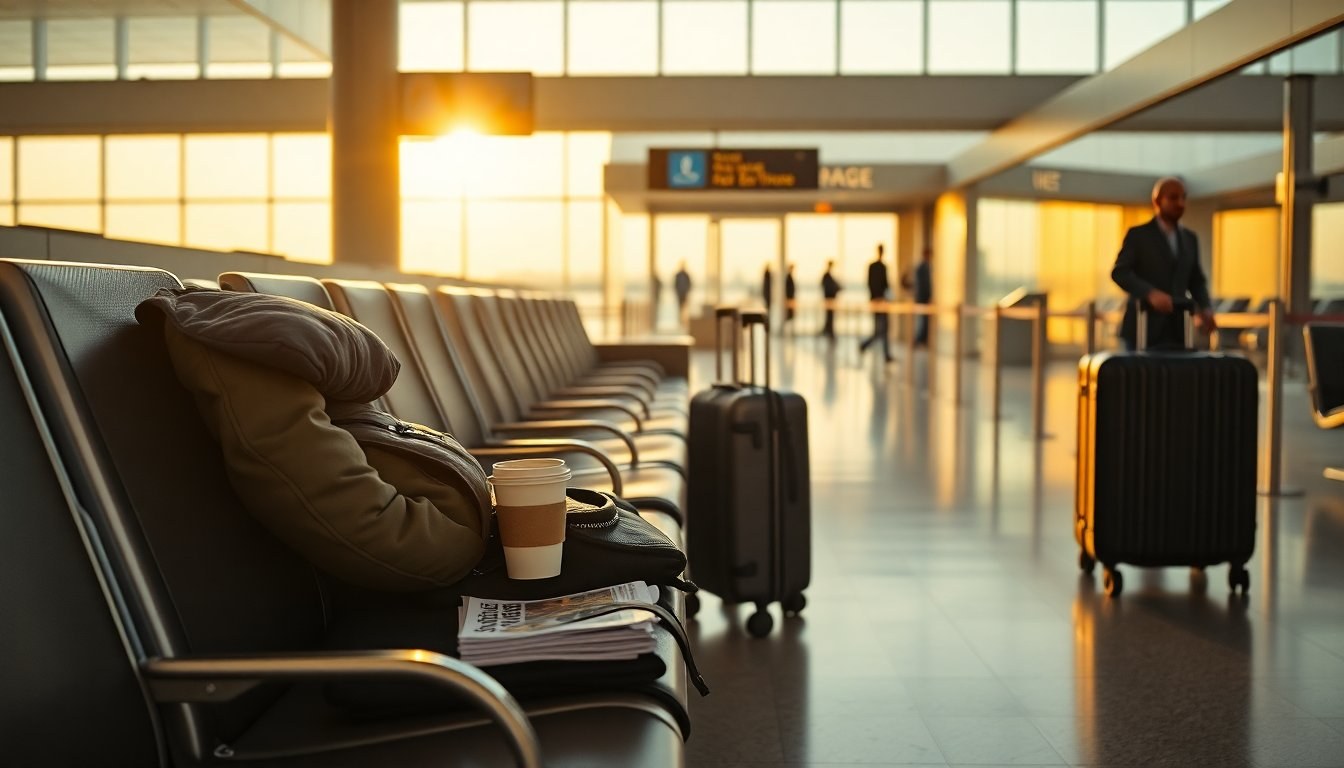
Airports bring out habits that would rarely appear anywhere else. A wide international poll of 9,000 travellers, carried out by Opodo, maps how people behave from arrival to boarding and which actions trigger the most complaints. The findings reveal clear patterns: some passengers deliberately arrive early to avoid stress, while others gamble on last-minute check-in; some patiently wait for their group, and others edge forward to claim a good position. These differences matter because they influence the shared space of terminals, the flow through security, and the tone of the journey before it even begins.
The survey captures both broad trends and national contrasts. It quantifies how many people prefer to arrive well ahead of time, how many follow airline recommendations, and which behaviours—like queue-jumping or leaving rubbish—rank highest on the irritation scale. By highlighting categories of boarding behaviour and listing the most disliked airport habits, the report offers a practical snapshot of modern travel etiquette and the small frictions that add stress to a trip.
Arrival timing: who plays it safe and who pushes the clock
When it comes to arrival strategy, most travellers favour caution. According to the survey, 59% of respondents said they feel calmer arriving earlier than strictly necessary, even if it means waiting at the gate. A further 36% reported that they generally arrive within the window airlines recommend—usually two to three hours before departure—while a bold 4% stated they prefer cutting it close and arriving shortly before take-off. The data also shows a gender nuance in the UK: 6% of men admit to last-minute arrivals versus 3% of women. These choices affect queue length at check-in and security and shape the mood of the terminal.
Pre-boarding psychology: the four passenger types
Opodo’s research groups passengers into four behavioural types during the pre-boarding phase: the sitter, the hoverer, the pre-queuer, and the anti-queuer. Globally, the most common type is the sitter: 48% of respondents said they remain seated until their boarding group is called. National differences appear strongly here: 66% of Portuguese stay seated, 51% of Britons do likewise, but only 36% of Italians admit the same level of patience.
Hoverers, pre-queuers and late boarders
The next largest group, the hoverer, represents 23% and includes those who stand near the queue ready to join at a moment’s notice. About 12% are pre-queuers who form an unofficial line early; that share rises to 15% among Germans and Italians but drops to 9% in the UK. Finally, 11% call themselves anti-queuers, preferring to board last on the assumption their seat will still be available. This laissez-faire approach is most common among Italians (18%) and French (17%), while Spaniards and Britons are 14% and 12% respectively.
Pet peeves at the gate and on the plane
The survey also pinpoints which actions spark the most frustration. Topping the list is queue-jumping: 48% of global respondents named it as the most annoying behaviour at security or during boarding. In France and the UK, that figure climbs to 51%. Close behind is the habit of seat-hogging in terminals—leaving seats blocked with suitcases—disliked by 45% overall, with 52% of Britons and 50% of Portuguese calling it a nuisance, while only 35% of Italians found it particularly bothersome.
Other annoyances: litter, noise and baggage claim crowding
Littering at gates or on plane seats is another frequent complaint: 42% of respondents worldwide dislike this, with 49% of French, 47% of Germans, and 46% of Spaniards especially concerned. Noise is also a friction point—40% of travellers are irritated by loud phone calls or speaker use, although Britons appear slightly less sensitive at 37%. A quirky but real irritation involves people crowding the baggage claim area: 25% of Britons and Germans said this annoyed them, compared with just 12% of French respondents and around 19% globally. Even small issues like squeaky bags register: 9% of global travellers flagged noisy rolling luggage as a nuisance.
What this means for travellers
Understanding these dynamics helps both frequent flyers and occasional travellers navigate shared spaces more smoothly. Simple choices—being mindful of airport etiquette, avoiding unofficial queues, keeping seats free for others, and disposing of rubbish—can reduce tension and improve the experience for everyone. The survey underscores that while terminals are temporary environments, the small behaviours practiced there have outsized effects on comfort and stress levels during travel.


