
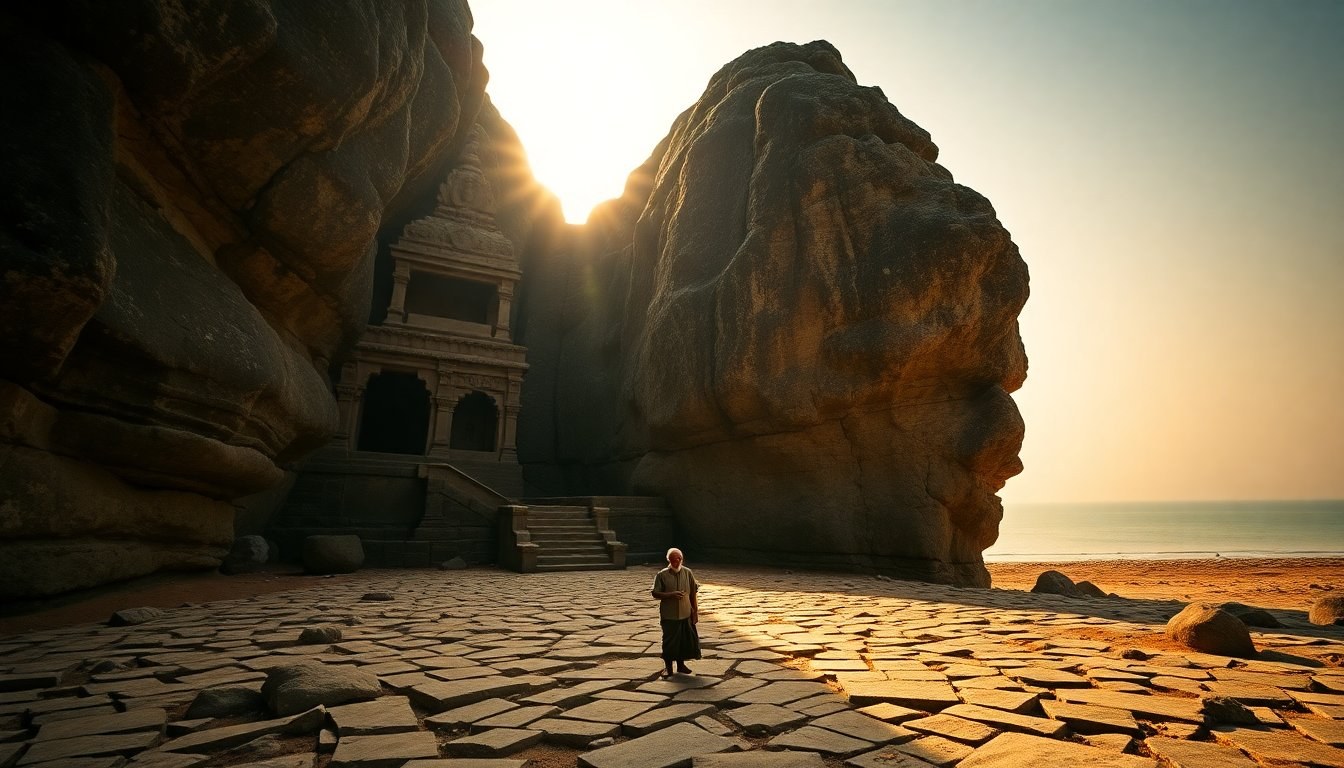
The southern tip of Tamil Nadu often appears in guides for its beaches, sunrise viewpoints and famous monuments, but tucked among the ridges of the district is a quieter attraction: the Chitharal Jain Rock Cut Temple. Perched close to the small village of Chitharal and not far from well-known landmarks such as the Vivekananda Rock Memorial and the Thiruvalluvar Statue, this compact shrine is carved directly into stone and is believed to be more than a thousand years old. The site resists theatrical presentation and instead rewards visitors who slow down and read the place for themselves. The term hidden gem is often used in travel copy, and here it feels apt because the temple retains a low profile amid busier circuits.
On first approach the temple does not demand attention; it does not present a grand gate or dramatic façade. Instead, the stone faces and niches reveal themselves in stages as you climb a short slope of uneven rock. A local guide I spoke with put it simply: people arrive drawn by the panorama but leave carrying the hush of the place with them. That observation captures the site well. The experience is more contemplative than cinematic, and the contrast with nearby, heavily promoted attractions sharpens the memory of a visit. The authenticity of the atmosphere here is not staged; it is an outcome of modest scale and minimal commercialization.
The art carved into living rock
The temple’s decorative program is reserved rather than extravagant. Close inspection reveals finely incised figures of Jain Tirthankara and attendant motifs worked into the stoneface, weathered but legible. This is classic rock-cut architecture where workmanship emphasizes disciplined lines and restrained composition over flamboyant ornamentation. The carvings feel intentional and meditative, crafted for durability and meaning rather than spectacle. If you compare it loosely to larger temple complexes like Khajuraho, Chitharal operates on a different aesthetic frequency: quieter, simpler and more intimate. Those differences make it valuable in a travel itinerary because it presents an alternative way to encounter sacred stone and historical continuity.
The visitor route and what to expect
The physical approach is brief: a short climb across uneven outcrops that slows you down. Along the way you notice the texture of the bedrock, the play of wind across open ground, and the sudden visual opening when the hilltop arrives. There are no audio guides, no soundtracks and no curated lighting—just raw exposure to the elements and the carved surfaces. The lack of theatrical framing encourages reflection; the site seems to prompt silence without demanding it. Practically speaking, Chitharal pairs well with other nearby stops such as the Padmanabhapuram Palace or the coastal viewpoints around Kanyakumari, so it makes for an easy detour if your route already includes those attractions.
Subtle details worth noticing
Take time to examine the proportion and pose of the sculpted figures and the tool marks that survive in sheltered niches. Small elements—an incised eyebrow line, a residual pigment trace or the manner in which a figure is framed within a carved alcove—reveal the priorities of the artisans. From a communication perspective, these attributes are important keywords for storytelling because they convey both craftsmanship and continuity. The site resists sensational descriptions; instead it rewards close reading. If you document the visit, low-key imagery and reflective copy tend to capture the atmosphere better than flashy angles or forced narratives.
Why Chitharal matters to travelers and storytellers
For travel writers and destination marketers the temple raises useful questions about how we choose and present places. The commonplace label hidden gem is overused, yet Chitharal genuinely fits because it has significance without heavy promotion. Modern travelers increasingly seek experiences that feel unmanufactured and authentic, preferring Iess staged environments and more room for personal interpretation. From a storytelling stance, Chitharal is a reminder that some sites endure not because they are pushed into the spotlight but because their presence prompts quiet curiosity. A brief detour here can change the tempo of a Kanyakumari itinerary, offering a reflective counterpoint to more celebrated landmarks and enhancing an overall travel narrative.


