
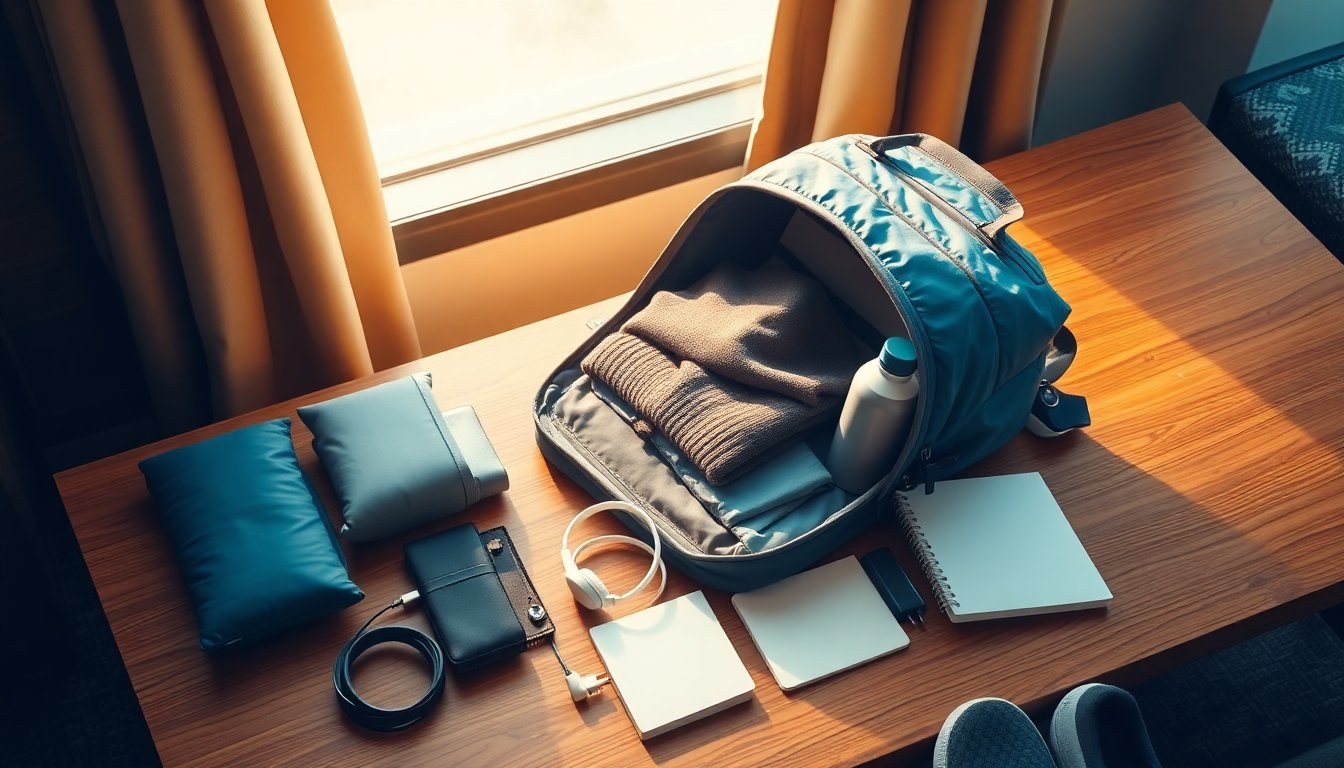
Affiliate disclosure: this article contains affiliate links that may earn a small commission at no extra cost to you; I only link to items I use or would happily recommend. As an Amazon Associate I earn from qualifying purchases. The advice here is centered on a practical one-bag travel approach: a philosophy of carrying everything you need in a single, compact pack so movement feels natural and choices are simpler. Below I explain the core pieces that repeatedly prove useful on short trips and small adventures, why each matters, and how they fit into a system organized around mobility, organization, versatility, and self-sufficiency.
Mobility: keep transitions light and stress-free
For me, the backbone of mobility is a backpack that behaves like a daily bag rather than an expedition sack. A 25–30L everyday-style pack (I use a Patagonia model) sets the upper limit for what gets carried and forces disciplined choices; if something won’t sit comfortably inside, it’s usually a sign to pare down rather than upgrade. Pairing that with a small waist- or sling pack (I favor an ultralight Osprey option) keeps essentials at hand—passport, wallet, phone, portable battery—so you don’t open your main bag in crowded terminals. Together, a compact main backpack and a simple essentials sling make moving through airports, buses, and city streets easier and less conspicuous.
Backpack design and everyday carry considerations
Choosing a pack that looks ordinary changes how you feel in public spaces: it reduces attention and blends into daily life. An everyday profile lets you put the bag under a seat on planes and use it as your daily commuter pack after arriving. The sling should be roughly 2 liters—enough for the essentials but small enough to carry without thinking. This setup minimizes fumbling, keeps valuables close in busy areas, and lets you travel with confidence, especially when switching between public transit and walking around a new neighborhood.
Organization: make a small volume feel composed
To turn fabric chaos into a predictable system, I rely on two organizational modules: packing cubes and a dedicated shoe pouch. Compression packing cubes (I choose a set from Eagle Creek) reduce wasted air and keep garments in neat blocks, which is the primary trick to fitting more into a smaller pack without creating a messy pile. A fully opaque shoe pouch (Peak Design makes a tidy one) contains dirt and creates a stable base at the bottom of the bag. Together these pieces keep clothing compact, protect clean items from shoes, and make unpacking as simple as removing a few uniform pieces from the bag and placing them on a shelf.
Versatility: choose items that pull double duty
When your bag is small, each item must earn its place. A lightweight insulated jacket like the Patagonia Nano Puff serves as the primary warmth layer across seasons: compact, packable, and presentable enough for urban settings. For footwear I usually travel with a single pair of low-profile trail running shoes (I prefer a neutral-colored Nike Pegasus Trail) that cover long city walks, casual dinners, everyday runs, and light hikes. These two choices stretch your outfit options without adding extra bulk, so you can handle varied climates and activities while avoiding the need for multiple specialized garments or shoes.
Self-sufficiency: reduce reliance on local services
Two tools help me avoid being dependent on a laundromat or guessing plug types: a compact universal travel adapter and a portable laundry system. A multi-format adapter (I trust a model like Epicka’s universal adapter) removes the need to pre-plan plug types for every country and keeps charging simple. For clothes, a small wash bag with internal washboard texture (Scrubba or similar) lets me refresh garments in any sink or tub, shrinking the clothes I need to pack for week-long trips. These items reduce logistical friction and open up more lodging choices since laundry access is no longer a hard requirement.
Rhythm and practical use of self-sufficiency tools
Instead of treating laundry as a big single chore, I wash small loads every few days; that routine keeps loads manageable and prevents clothing from piling up. The adapter becomes part of my nightly routine—plug in phone and e-reader—and the wash bag washes a couple of shirts and socks quickly. Together they let me travel lighter and choose accommodations based on comfort rather than whether they include a washer.
None of these items are exotic or expensive splurges; they are practical components of a coherent system that prioritizes efficiency and freedom of movement. By combining a modest-sized everyday backpack, a small sling, compression packing cubes, a shoe pouch, a warm but compact jacket, versatile trail shoes, a universal adapter, and a portable wash setup, you can pack far less while keeping options open. If you want a full inventory and packing method, a complete one-bag checklist can map every single item into this framework, helping you decide what truly earns a spot in your pack.


