
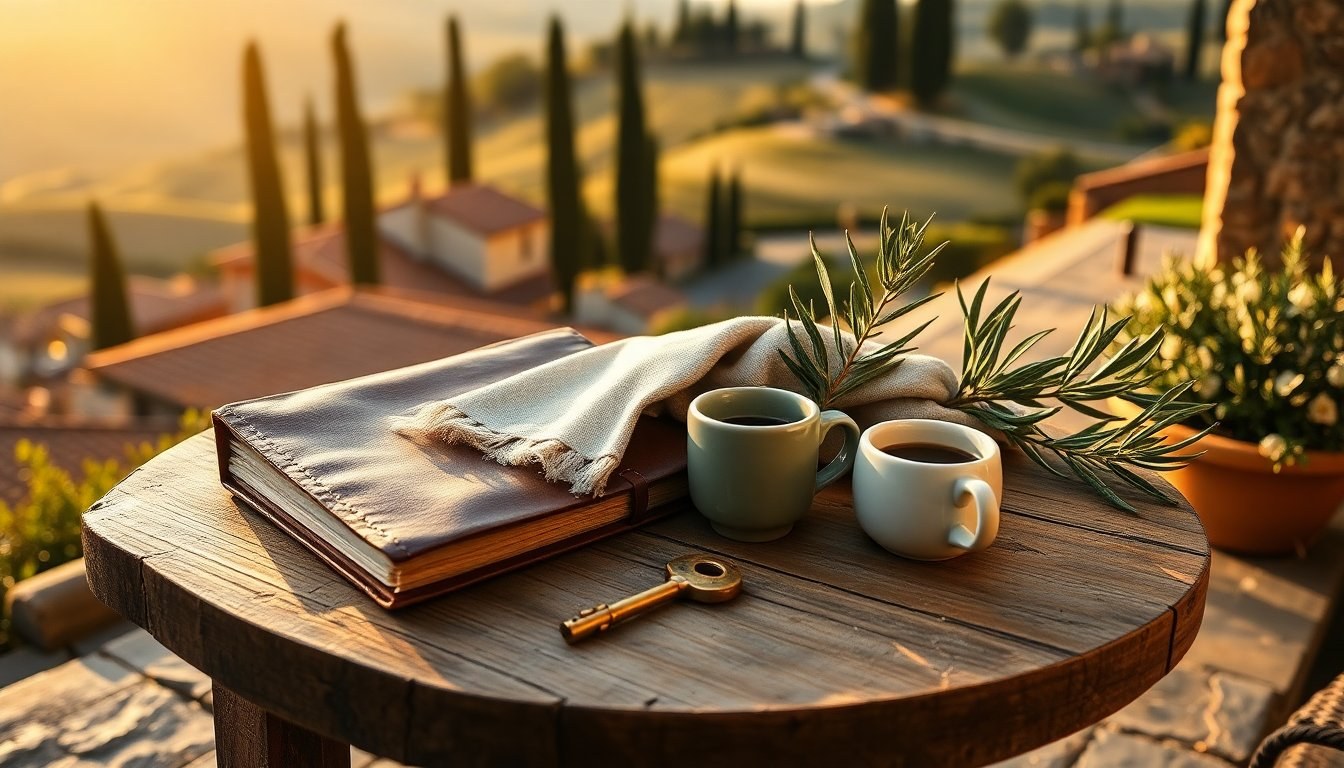
The film Non è un paese per single, adapted from Felicia Kingsley’s bestselling novel, transports viewers into an intimate vision of rural Tuscany. Released on Prime Video on 8 May 2026, the movie recreates the imagined village of Belvedere in Chianti through real locations in the province of Siena. The story centers on Elisa, a single mother who runs the estate called Le Giuggiole, and on the emotional upheaval that follows when two heirs arrive to claim the property. Beyond the plot, the production deliberately foregrounds the landscape: hills, stone lanes, a working farm and village squares are as crucial to the narrative as the characters themselves.
While the village in the book is fictional, the film team chose concrete Tuscan settings to embody its spirit. The project was announced in July 2026 and directed by Laura Chiossone, with a screenplay by Alessandra Martellini, Giulia Magda Martinez and Matteo Visconti. Co-produced by Amazon MGM Studios and Italian International Film – Lucisano Media Group, the adaptation preserves the novel’s rustic romance and social themes. The lead role of Elisa is played by Matilde Gioli, with Cristiano Caccamo as Michele and Sebastiano Pigazzi as Carlo; the cast also includes Amanda Campana, Cecilia Dazzi, Margherita Rebeggiani, Marco Cocci and Bebo Storti.
From novel to screen: themes and creative choices
The original novel, published in 2002 by Newton Compton, sold more than four million copies and has been translated into twenty countries. In adapting the text, the filmmakers retained key motifs: the clash between tradition and commerce, the role of land in forming identity, and the messy tenderness of small‑town relationships. The production’s set decorator, Giulia Parigi, emphasized an aesthetic of lived-in warmth: a farmhouse kitchen as the emotional center, jars of preserves, freshly baked bread and an always-lit hearth. This visual language reinforces a core idea repeated in interviews with the creative team: for Elisa the vigna and the fields are not scenery but survival, a legacy that resists being reduced to a mere asset.
Why Montalcino and Sant’Angelo in Colle were chosen
The filmmakers selected locations in the province of Siena to represent the fictional Belvedere in Chianti because of their preserved medieval layouts and panoramic countryside. The town of Montalcino, with its hilltop fortress and narrow streets, supplied much of the visual vocabulary of the film. Its small center is compact and walkable, featuring landmarks like the Duomo (Concattedrale del Santissimo Salvatore), the Palazzo dei Priori and Piazza del Popolo. A five-pointed fortress crowns the town and offers sweeping views across the Val d’Orcia, a landscape that becomes a character in its own right in the movie.
Montalcino: what to look for
Visitors who want to trace the film’s footsteps will notice the fortified walls and the intimate squares that double as community hubs on screen. Montalcino’s museums — including the combined civic and sacred art collections — add historical texture that informed the production design. Agricultural traditions such as Brunello wine and local pork specialties are referenced in the film as part of the social fabric: the land produces not only food but identity and memory, a point underscored by dialogue and visual detail.
Sant’Angelo in Colle: the village used for Belvedere
Sant’Angelo in Colle, technically a hamlet of Montalcino, provided the narrow alleys and the small square that the movie presents as the heart of Belvedere. Key filming locations include Piazza Castello, the Romanesque church of San Michele Arcangelo and Palazzo Franceschi. The quaint Piazzetta del Pozzo, once home to a communal cistern, and the adjacent Palazzo dei Tolomei appear in multiple scenes. Thanks to its elevated position, Sant’Angelo also offers expansive views toward Monte Amiata and the Maremma, seen in the film as wide, breathing backdrops to the characters’ private dramas.
Planning a visit: tips for a cinematic day trip
Those inspired to visit can experience many of the same sights without a complicated itinerary. Walk the cobbled lanes of Sant’Angelo in Colle to absorb the village atmosphere, then take the ramparts at Montalcino for panoramic views. Taste local products in family-run osterie to connect with the food-centered scenes from the film. Respect private properties — the estate named Le Giuggiole in the story is represented by working farms and rural houses, not a theme set — and consider a guided walk along the Via del Sole, a simple pedestrian route praised by locals for its photographic perspectives. The film’s attention to how land shapes lives makes these places rewarding for visitors interested in culture as much as scenery.


