
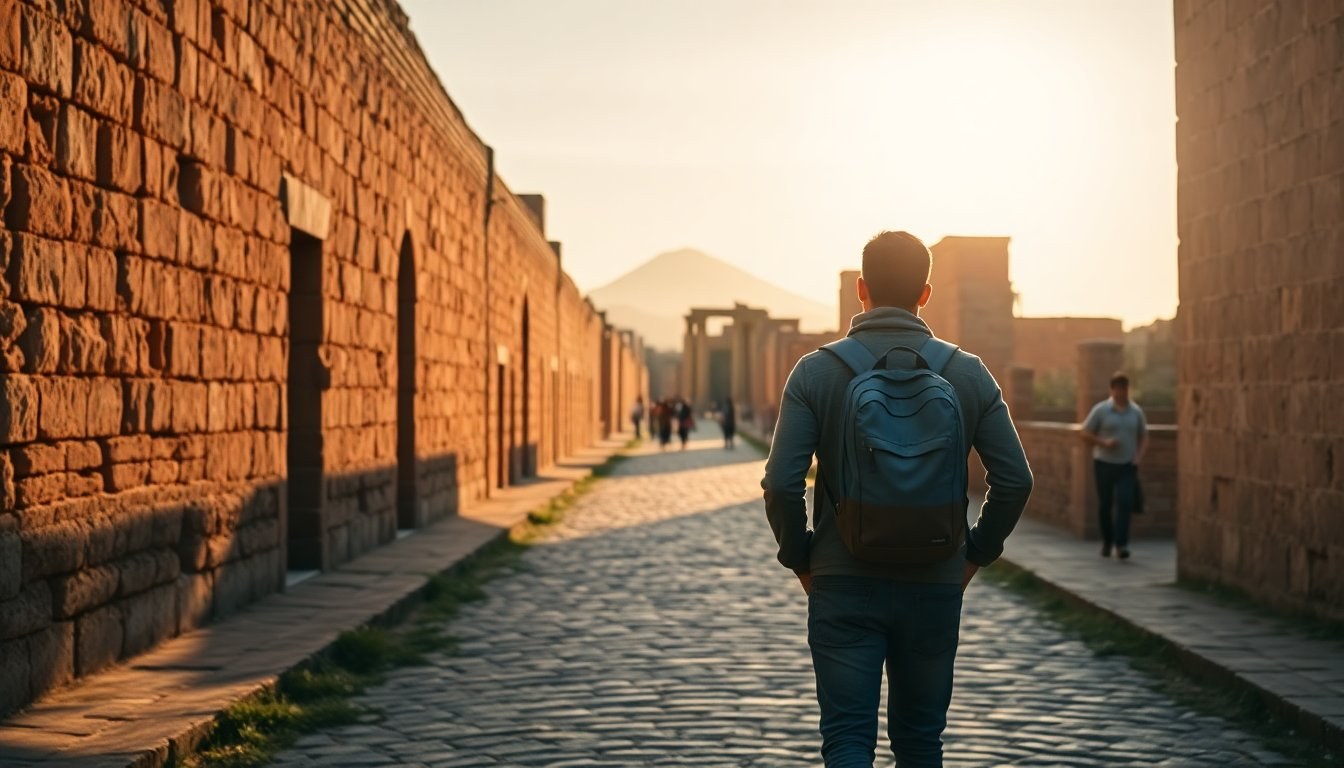
Standing among the streets of Pompeii is like stepping into a paused moment of Roman urban life. When Mount Vesuvius erupted on October 24th, 79AD, ash and rock buried the town until it was found 1,520 years later, leaving buildings, objects and people remarkably preserved. That extraordinary preservation—paired with active archaeology and a UNESCO listing—makes the site a singular experience. But because Pompeii is so large and layered, some planning will make the day more enjoyable and less frantic.
This guide reorganizes practical advice and discoveries into a few focused sections so you can approach the site intentionally. Whether you prefer a guided tour, an audio track, or wandering solo, the same core strategies—timing, footwear, hydration, and a map—will shape a better visit. You’ll find pointers on time needed, entry points, and a handful of compelling details that bring daily life in the Roman world to life.
Why Pompeii still matters
Pompeii provides a rare, detailed snapshot of an ancient city because the eruption preserved streets, homes, shops and art in situ. Archaeologists discovered not just buildings but items of daily life and human remains; molds taken from voids in the ash have produced around 1,000 casts that show people frozen in their final moments. The surviving wall paintings and architecture—like the frescoes in the House of the Vettii and the famous panels in the Villa of Mysteries—offer vivid evidence of Roman aesthetics and ritual. Small facts, such as the distinctive pigment nicknamed Pompeii Red or graffiti derived from the Italian verb graffiare (to scratch), create a textured sense of place.
Planning and practical tips
Tours, guides or going it alone?
Decide whether you want structure or freedom. A professional guide or a small group tour brings curated context and stories that illuminate the ruins; guides often point out details you might miss. Alternatively, a self-directed visit with an audio tour or a reputable guidebook lets you set the pace and linger where you choose. Many visitors combine both approaches: start with a guided or audio route to learn the layout, then use a paper map to explore independently. Audio resources—like published guides—are especially useful for bite-size explanations without the constraints of a scheduled group.
Logistics and comfort
Buy your tickets online to skip long lines and save time at the entrance. Note major entry points such as Porta Marina and Piazza Anfiteatro so you can plan arrival and departure. Wear sturdy shoes: the walking surfaces are mostly uneven basalt stones and can be slippery when wet. Bring a refillable water bottle and snacks—there is only one main cafeteria inside the park—and use on-site fountains to top up. Aim to visit early or late to avoid heat and peak crowds; make a rough route from the map to avoid unnecessary backtracking.
How much time should you allocate?
The site covers about 163 acres, so distances between highlights add up. A relaxed loop often takes around four hours, but many travelers spend a full day exploring. In one typical visit, people arrive around 9am and leave near 3pm, which can amount to roughly six hours on site and, depending on pace, over 14 km walked. If you only have a short window—an hour or two—consider a smaller site like Herculaneum instead. For a single-day visit, prioritize a few areas you really want to see and accept that you cannot cover everything.
Highlights and small discoveries
Beyond the headline attractions, look for the everyday infrastructure that speaks to Roman urban planning: raised sidewalks, permanent stone barriers that controlled chariot access, and counter-lined shops that were the ancient equivalent of fast food stalls. Expect lines at certain spots—the brothel often draws large groups—but also take time to sit and imagine life in the Forum or linger over a fresco. The choice to skip paid extras such as the Villa of Mysteries can be sensible on a first visit; many find equally stunning frescoes inside the main archaeological park, such as those in the House of the Vettii.
Finally, remember that a visit to Pompeii combines moving history with physical exertion. Plan your route, protect yourself from the sun, and leave space to simply absorb the place. With a little preparation you’ll come away with a clearer sense of Roman city life, powerful human stories preserved in ash, and memories of an extraordinary archaeological landscape.


