
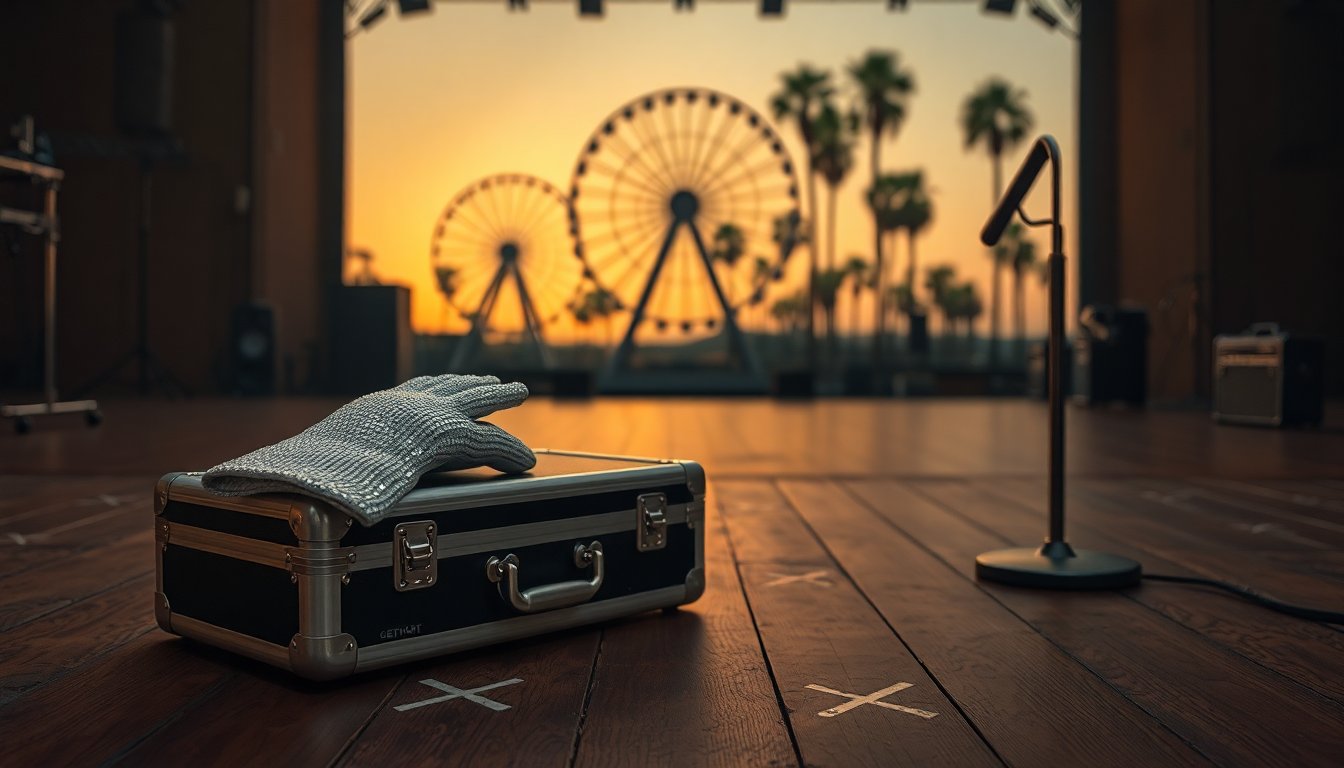
The new film about Michael Jackson, directed by Antoine Fuqua and released in theaters on 22 April 2026, reconstructs the life of the pop star using locations that carry strong personal and cultural weight. This is not a superficial revival: the production approaches the subject as a complex biopic, aiming to show both the creative milestones and the darker forces that shaped Jackson’s public and private life. With a reported budget of at least $155 million, the filmmakers were able to secure and restore several authentic Californian sites closely connected to the singer’s story.
Casting choices have intensified interest in the project: Michael is portrayed by his nephew, Jaafar Jackson, while the crew has recreated famous stages, homes and even amusement features to evoke different eras of the artist’s career. The movie balances concert sequences, studio work and intimate moments, using real-world sites to anchor its narrative rather than relying solely on soundstages. The result is a location-driven retelling that tries to make place itself a character in the story.
The film’s narrative focus and tone
The movie avoids a one-sided tribute and instead opts for a layered portrait that examines talent alongside turmoil. Under Fuqua’s direction the screenplay digs into the discipline imposed during childhood, the pressure of early fame with the Jackson 5 and a fraught managerial relationship with the father, all elements that the film treats candidly. It does not shy away from controversial chapters—most notably the allegations of sexual misconduct that surfaced in the early 1990s—and it depicts the personal isolation and dependency issues that contributed to the star’s decline.
A balanced approach to legacy
Alongside the darker material, the production celebrates creative triumphs: the genesis of landmark songs, collaborations with figures such as Quincy Jones, and the spectacle of the Bad World Tour, which the movie presents as the artist’s professional peak. These scenes are filmed with attention to detail, and the production team sought authenticity by shooting at sites connected to both performance and domestic life. Using real places helps the film show how environment and fame interacted to shape Jackson’s choices.
Key filming locations and their cinematic roles
The production selected several Californian properties that fans will recognize. Each location was chosen for its narrative resonance and, in some cases, restored to match the period portrayed on screen. Among the most prominent is the Neverland Ranch, which the crew refurbished to reflect its 1990s appearance: rides, a theater, a miniature train station and the spirit of an enchanted private estate are all recreated to evoke the singer’s vision of a personal wonderland for friends and children in need.
Neverland renewed
The movie shows the Neverland features that once existed even though the real property fell into disrepair and later changed hands. The film’s sequences present Neverland as both an imaginative refuge and a complex symbol of isolation. Although these areas are central on screen, the actual Neverland Ranch remains private and inaccessible to casual visitors today, preserving the sense of distance between public myth and private reality.
Hayvenhurst and other emblematic sites
Another cornerstone is Hayvenhurst, the family home in Encino where Jackson spent formative years and where early hits were composed. The production recreated interior and exterior details to evoke the period when the family moved from Indiana and the young performer began his ascent. The crew also filmed in places like the western stretch of Union Pacific Avenue, the actual backdrop used in the classic “Thriller” video, and at the downtown arena now known as Crypto.com Arena, a site tied to the public funeral and the final rehearsal period before the artist’s death.
Reconstruction, pilgrimage and practical notes
Not every scene was shot on the original historic stage: the team sometimes rebuilt venues for logistical reasons, for instance staging early Jackson 5 shows at the Orpheum Theatre to represent a range of small-audience performances. In Burbank, an abandoned K-Mart was refitted as an era-accurate toy shop to film moments of impulsive shopping captured in the narrative. Studio interiors and live sequences were completed on Hollywood soundstages, blending location authenticity with controlled production environments.
Fans and curious visitors should note that many of these places remain private or restricted, and the movie’s visual reconstructions do not translate into public access. Still, the use of familiar California addresses gives the film a grounded, almost documentary texture that invites reflection on how place shapes persona. The production’s willingness to restore and shoot at such sites—by the same team involved in films like Bohemian Rhapsody—underscores the filmmakers’ intent to make setting a vital part of this cinematic exploration of a complicated cultural figure.


