A weekender bag can hold a couple of days of clothes, shoes and tech, but only if it is packed in the right order. Before deciding what goes in, it helps to choose the right bag, since the style sets how easy the packing will be and how the bag travels.
Structured weekender or unstructured duffel
For two days of work clothes, a structured weekender is the easier choice. Its flat base, separate bottom compartment and padded laptop sleeve keep folded clothes, shoes and tech from ending up in one pile. A duffel is lighter to carry, and a lay-flat style is sized to slide under the seat in front of you.
The source material describes three models. The Weekender measures 17.91 by 15.75 by 9.84 inches, holds 42 liters, weighs 3.68 pounds empty and has a padded sleeve for a 16-inch laptop. It was listed at $118. The Mini Weekender holds 32 liters, weighs 3.11 pounds and has the same laptop sleeve and bottom compartment, at $108. The Ultimate Travel Duffle holds 25.32 liters, weighs 2.82 pounds and has a padded compartment for 13 to 15-inch laptops. It opens fully flat and is sized as a personal item on major U.S. airlines, at $118.
Both styles have trade-offs. A fully packed 42-liter weekender is a heavy shoulder carry, and it rides in the overhead bin rather than under the seat. An unstructured duffel, with one open cavity and no laptop padding, is the fastest bag to stuff with soft items, but it offers less organization and wrinkle protection.
Packing order inside the bag
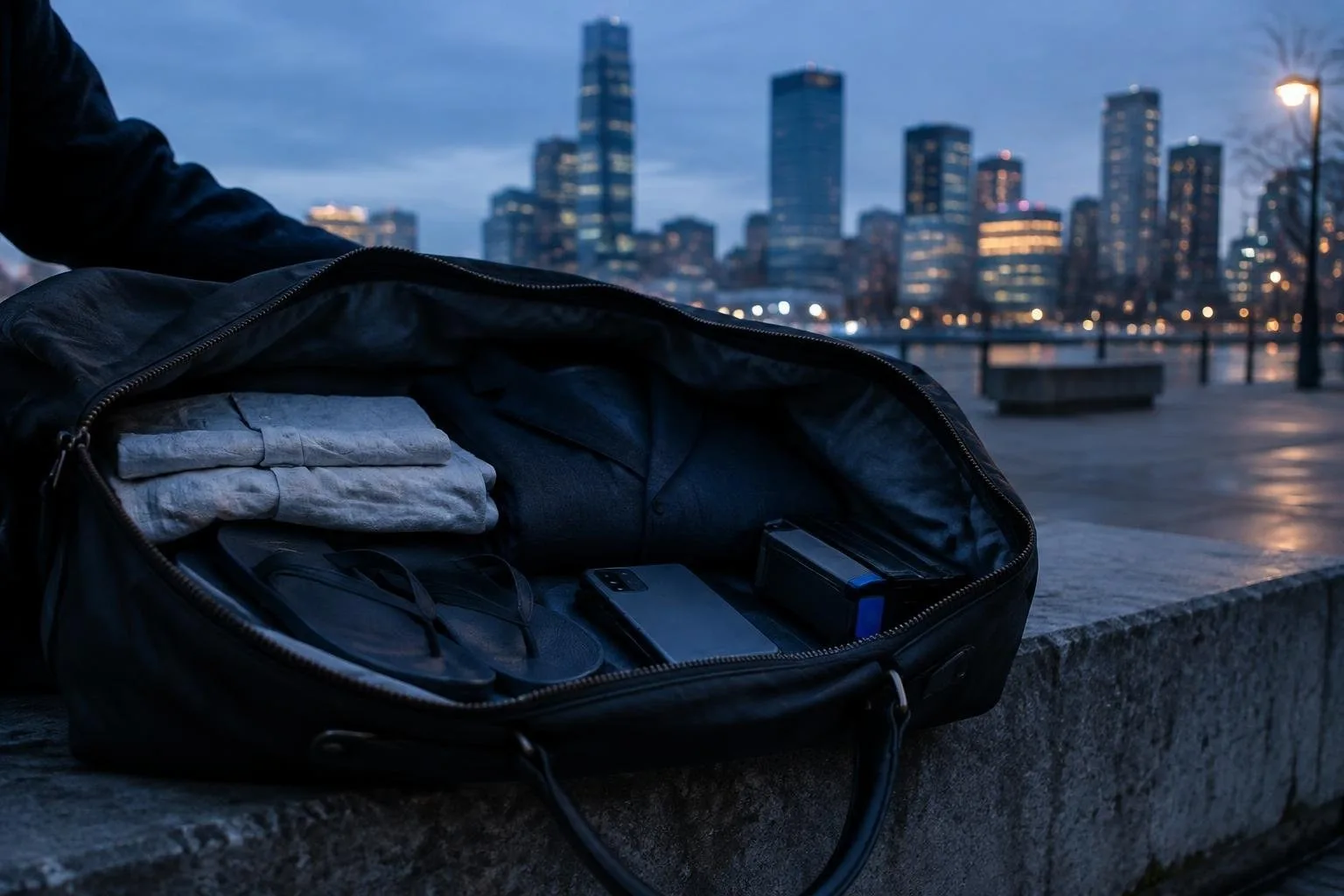
Base layer: Roll softer items such as t-shirts and sweaters, which saves space and prevents wrinkles. Use packing cubes to keep similar items together, and tuck socks and underwear into shoes to make use of every inch.
Middle layer: Place heavier items such as jeans or jackets next. Keep the things you will reach for often near the top, and use the internal pockets for smaller essentials.
Bottom compartment: Shoes go here, in dust bags or shower caps if you have them, along with the toiletry kit, dirty clothes, gadgets or a blow dryer.
Quick-access pockets: Chargers can go in the side pocket, while passports and boarding passes stay in the quick-access pocket. The laptop belongs in the padded sleeve.
Checklists for beach, city and nature breaks
The same bag can serve different trips, so it helps to adjust the list to the destination. The material supports the following items for each type of break.
Beach: swimsuit, beach towel and sunscreen. A swimsuit makes sense at the beach but less so at a work conference, so it is a useful item to leave out of a city trip.
City: one dressy outfit, a laptop if work is involved, and a small crossbody bag for daily outings.
Nature: insect repellent, depending on whether mosquitoes are expected, and a warm layer such as a winter coat, hat, gloves or scarf, but only if the weather calls for it. Gym clothes and a daypack can also help if you plan to be active.
For all trips, the sources recommend a short list of essentials: one pair of pants, one clean t-shirt or long-sleeve shirt, pajamas, one set of underwear and socks, a toothbrush and toothpaste, deodorant, any prescription medication, a phone and a portable charger with cables. Headphones and a laptop, tablet or e-reader are optional and depend on the trip.
Carry-on limits and weight
A weekender usually works as a carry-on. Many major U.S. airlines cap carry-ons at 22 by 14 by 9 inches on their published baggage pages, and a soft-sided bag may compress when packed lightly. Measure the bag once it is packed, check your airline before you fly and distribute the weight evenly. On a trip with a roller bag, the weekender can be stacked on the trolley through its pass-through.