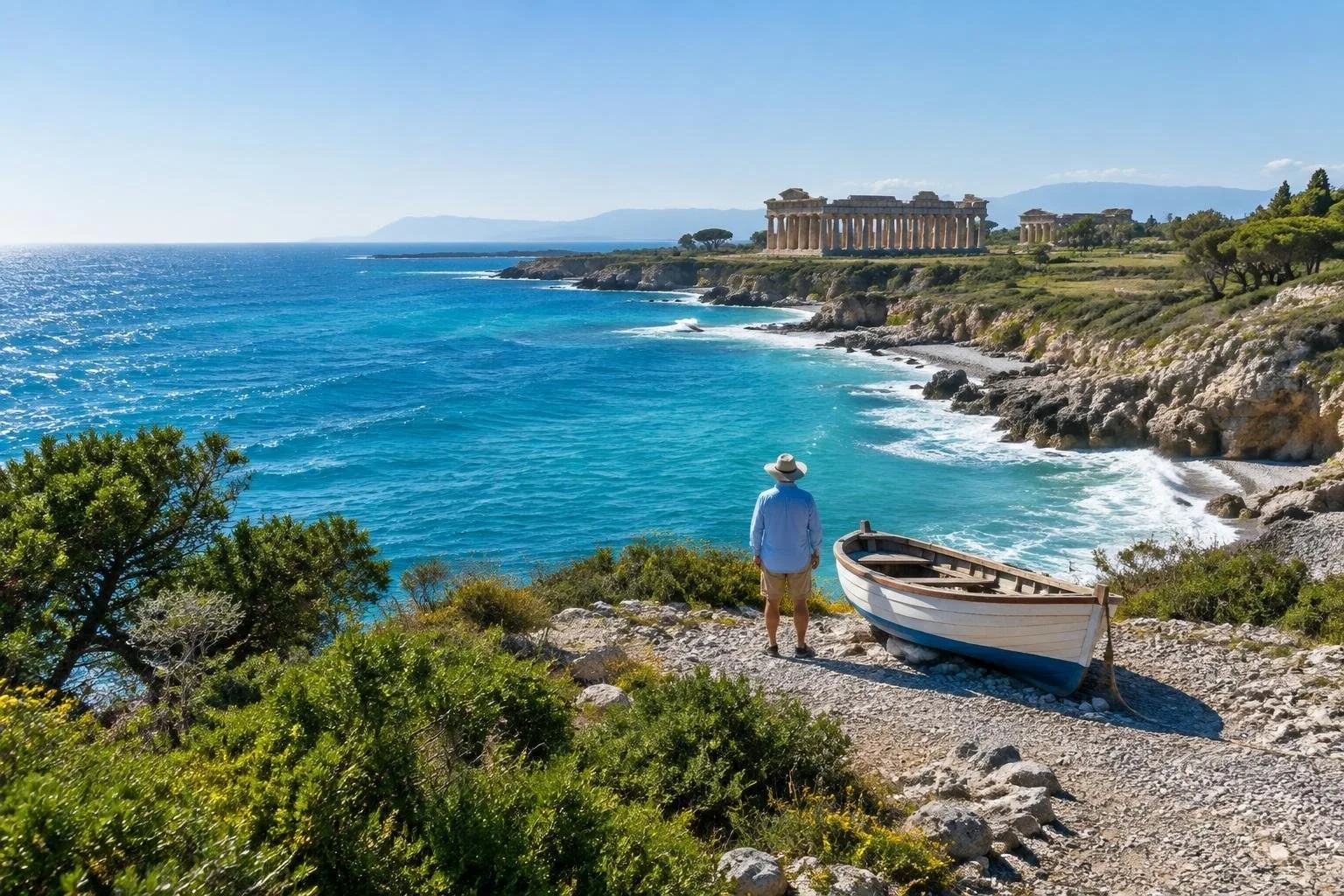
The southern tip of Campania hides a coastline that rivals the Amalfi cliffs without the relentless tourist pressure. From the ancient Greek sanctuary of Paestum to the crystal-clear coves of the Tyrrhenian Sea, the Cilento coast offers a blend of natural drama, cultural depth and culinary authenticity. Solo adventurers can join a dedicated itinerary that weaves together historic ruins, mountain-top viewpoints, and hands-on food experiences, all while staying in villages that feel lived-in rather than staged.
Geography, parks and wildlife
The heart of the region is the Parco Nazionale del Cilento, Vallo di Diano e Alburni, Italy’s second-largest protected area covering 1,810 square kilometres. Stretching from the limestone peaks of Monte Cervati (1,898 m) down to the rocky shoreline of the Gulf of Policastro, the park contains karst caves such as Grotte di Castelcivita, dense beech woods, and rivers like the Sele and Tanagro that empty into the sea. UNESCO listed the park in 1998, noting its combination of natural habitats and historic sites. Wildlife includes golden eagles, wolves and otters, making a single day of hiking and swimming a realistic possibility.
Ancient footprints: Paestum, Velia and Padula
On the northern fringe of the park lies Paestum, a former Greek colony known as Poseidonia. The site preserves three Doric temples—the Basilica (mid-6th c. BC), the Temple of Poseidon (5th c. BC) and the Temple of Ceres—considered among the best-preserved Greek temples outside Greece. Adjacent Roman baths and the Tomb of the Diver, with its rare fresco, illustrate continuous occupation into the Imperial era. Further west, the ruins of Velia (ancient Elea) host the Porta Rosa, Italy’s oldest rounded arch, and remnants of the Eleatic School of Philosophy that shaped early Western logic. The Certosa di San Lorenzo in Padula, founded in 1306, adds a Baroque monastic dimension; its 12,000 m² cloister is one of Europe’s largest. Together these sites form a UNESCO World Heritage serial property that tells a millennium-spanning story of Mediterranean civilization.
Food, figs and mozzarella: tasting the land
The culinary landscape mirrors the environmental diversity. The region proudly claims the birthplace of the Mediterranean diet, a UNESCO intangible heritage since 2010. At Tenuta Vannulo, a family-run buffalo farm, visitors watch artisans stretch curd into silky buffalo mozzarella and sample it straight from the vat: a sensory experience that eclipses supermarket versions. Further inland, the white fig of Santomiele enjoys DOP protection; cultivated since 600 BC, the fruit appears in desserts, preserves and savory sauces, often paired with local wine. Seasonal cooking classes in Trentinara let travelers recreate coastal dishes using extra-virgin olive oil, fresh seafood and mountain herbs, reinforcing the link between terroir and plate.
When to go: climate, crowds and seasonal activities
Shoulder seasons deliver the best balance of weather and solitude. Spring (March-May) offers blooming wildflowers, comfortable hiking temperatures and the start of boat services at Agropoli. Summer provides peak beach conditions but also higher occupancy and price points. Autumn (September-November) keeps the sea warm while vineyards, fig orchards and mushroom forests enter harvest, creating a gastronomic festival atmosphere; however, rain becomes more frequent after October and some ferry routes pause. Winter remains mild and quiet, though occasional closures affect mountain-area facilities. The solo-travel itinerary schedules four nights on the Cilento coast, ensuring ample time to explore villages like Castellabate, swim at blue-flag beaches, and attend local festivals without feeling rushed.
Practical tips for solo explorers
Travelers joining the dedicated tour benefit from small-group dynamics and local guides fluent in both history and cuisine. Accommodations are typically family-run B&Bs in historic centers, providing authentic hospitality and easy access to pedestrian streets. Public transport connects major points: Salerno to Paestum by train in 30 minutes, and coastal bus routes link Agropoli, Palinuro and Sapri. Renting a scooter remains popular for reaching secluded coves, though winding roads demand confidence. Packing should include sturdy walking shoes for park trails, a reusable water bottle for refill at mountain springs, and a light jacket for evening breezes along the sea.