
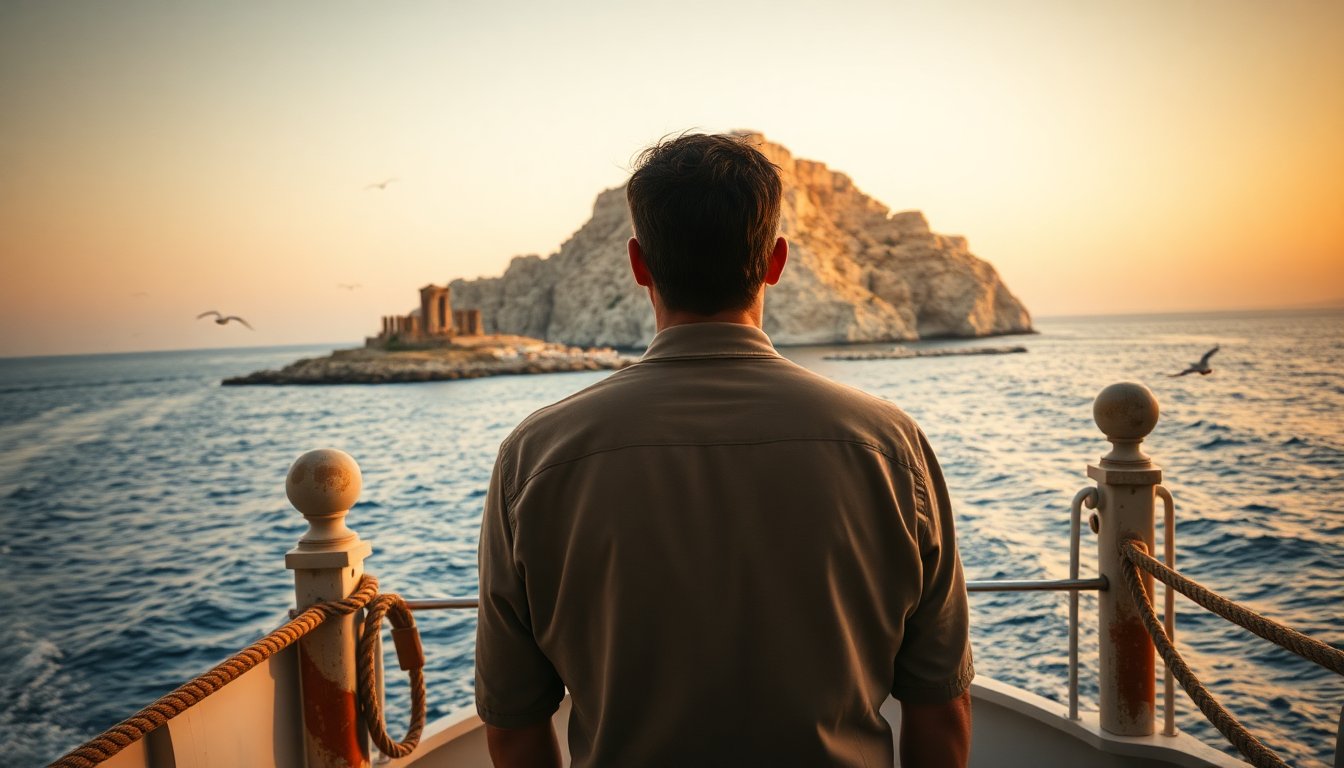
The moment the ferry rounds a reef and the light hits the shore, Ventotene appears like a pale wedge carved from the sea. The island is fewer than three kilometres long, yet its small footprint hides layers of meaning: volcanic origins, Roman ambition, and twentieth-century political history. The rock you see is mainly tuff, a compacted volcanic stone that shapes the coastline and gives cliffs their warm honey tones. That geology informs everything here, from the shape of the harbours to the colour of the beaches, and is the first thing to notice when you step ashore.
People have called the island many names: the Greeks knew it as Pandataria and the Romans used it as both a luxurious refuge and a place of exile. Centuries later, Ventotene again attracted attention as the site where the Manifesto of Ventotene was drafted in 1941–1942, a text that helped imagine a united Europe. Today the streets are compact, cars are rare, and a brisk schedule feels out of place — this is an island where moving slowly yields discoveries.
History and archaeology
Porto Romano: an engineered harbour
At the island’s core is the remarkable Porto Romano, carved directly into the rock between the 1st century BC and the 1st century AD. The Romans removed an enormous volume of tuff to create a sheltered basin that still protects boats from easterly winds. Walk the quays and you will find ancient bittes and cut mooring points peeking out beside later stonework; modern docks sit naturally within the original layout. The port is both an archaeological site and a living piece of infrastructure — a reminder of how practical engineering and maritime life have coexisted here for two millennia.
Villa Giulia and subterranean systems
On the northern side, the remains attributed to Villa Giulia overlook the open sea from Punta Eolo. The villa complex, associated by tradition with a daughter of Augustus, includes fragments of thermal rooms and terraces facing the water. Below ground the island reveals even more ingenuity: Roman cisterns were built to collect and store rainwater because Ventotene lacks abundant freshwater springs. These vaults were lined with cocciopesto, a waterproof mortar, and they survive as cool, echoing chambers where you can sense the logistics of island life in antiquity.
Nature and culture
Ventotene occupies a key position along the migratory corridor between Africa and Europe, which makes it a destination for birdwatchers and researchers. The local Museum of Migration and the ornithological observatory document species, ringing programmes and migration patterns; from the museum terrace you can sometimes see long lines of birds tracing ancient routes. The island’s human culture — small shops, bakeries and tight-knit neighbourhoods clustered around Piazza Castello — complements its natural character, offering moments of quiet exchange that feel as valuable as any monument.
Santo Stefano and the Panopticon prison
A short distance away is the smaller island of Santo Stefano, administratively linked to Ventotene. There, a circular prison complex inspired by the Panopticon concept was erected in 1795 and remained in use until 1965. Its radial design, cells facing an internal surveillance core, and complete isolation by sea make it a striking example of penal architecture. During the twentieth century the facility held political prisoners and figures who later played roles in Italian public life, adding a somber chapter to the islands’ story.
Beaches, access and the best time to visit
The island’s shoreline is varied: rocky platforms glow from iron-grey to sulfur-yellow, and the stones hold warmth long after the sun drops. Popular spots include Cala Nave, a broad cove protected by tuff cliffs and the offshore stacks called Nave di Terra and Nave di Fuori; Cala Rossano, convenient and close to the newer harbour; Parata Grande, reached by steps carved in rock and opening onto emerald water; Parata della Postina, known for a large sculptural stone with natural arches; and Cala Battaglia, a wilder, quieter inlet. Each offers different moods, from lively bays to secluded coves.
Ventotene is reached by ferry from Anzio, Formia and Terracina, with additional services at times from the Naples area; sailings increase in spring and summer and booking ahead is wise. Best months vary by experience: May and June bring long light and mild temperatures; July and August are busier and lively; September often combines warm sea and calmer rhythms and hosts local festivities such as the Feast of Santa Candida; October offers quiet days and soft colours. Check weather and sea conditions before travelling, since the wind can affect crossings.


