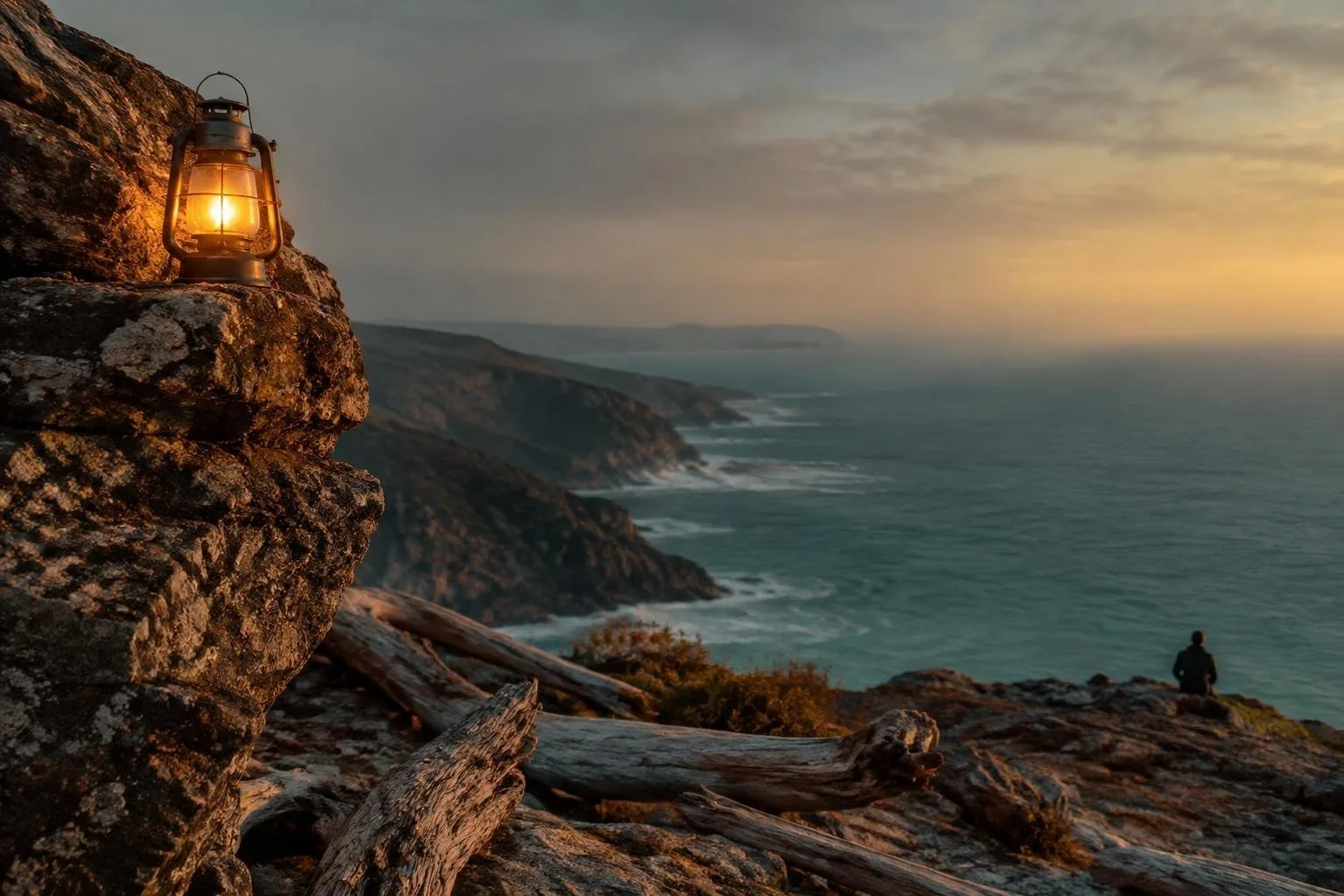
The southern tip of Sant’Antioco, a quiet island off Sardinia’s coast, hides a relic of nineteenth-century military engineering. From its stone parapets one can see the deep blue of the Gulf of Palmas, yet the structure that once pulsed with telegraph signals now sags under weather and neglect. Known locally as Su Semafuru, the former Capo Sperone signal station embodies a blend of strategic maritime history and fragile natural scenery.
Built from 1887 onwards, the station formed part of a network that linked ships to shore using visual and acoustic signals. Its elevated position allowed rapid communication across the sea, a capability that proved vital during both World Wars. After serving the Italian navy for seven decades, the post was finally decommissioned in 1958 and gradually fell into abandonment, leaving only walls and rusted machinery to testify to its former importance.
From strategic outpost to endangered monument
Beyond its architectural footprint, Su Semafuru sits inside the Special Protection Zone “Isola di Sant’Antioco, Capo Sperone”, an area prized for rare flora and fauna. Preserving the building would therefore protect a slice of both cultural and environmental heritage. The structure’s current state is precarious: the main tower leans, ancillary buildings have collapsed into piles of stone, and vegetation overtakes once-clear passages. Because of this deterioration, the site appears on the Italia Nostra Red List, a catalogue that flags Italian cultural assets in urgent need of care.
Italy Nostra’s online Red List – a new tool for citizens
The Red List initiative began in 2011, collecting reports of monuments, archaeological sites and historic villages that demand protection. In October 2026 the association launched an interactive digital platform where anyone can explore marked locations on a map, read detailed dossiers and even submit new observations for verification. To date, 520 entries have been recorded; 402 have been validated, of which 341 remain unsafe, 58 have moved to a “green” status after restoration, and three are classified as lost forever.
Among the most pressing cases listed alongside Su Semafuru are the Abbey of Santa Maria di Calena in Peschici (Gargano), the historic Arsenal of Venice, the archaeological remains of Megara Hyblaea in Sicily, and the medieval fortress of San Paolino in Ripafratta, Tuscany. The map not only raises awareness but also empowers local communities to act as watchdogs for their own heritage.
Why the site matters and how you can help
Saving Su Semafuru would preserve a tangible link to Sardinia’s maritime past while maintaining the integrity of a protected natural landscape. Visitors who manage to reach the site can experience a rare juxtaposition of sea-side wilderness and the echo of historic military life. More importantly, the online Red List invites the public to flag additional at-risk locations, ensuring that hidden gems do not disappear unnoticed. By registering a sighting, uploading photos or providing historical details, citizens become active participants in safeguarding Italy’s cultural fabric.