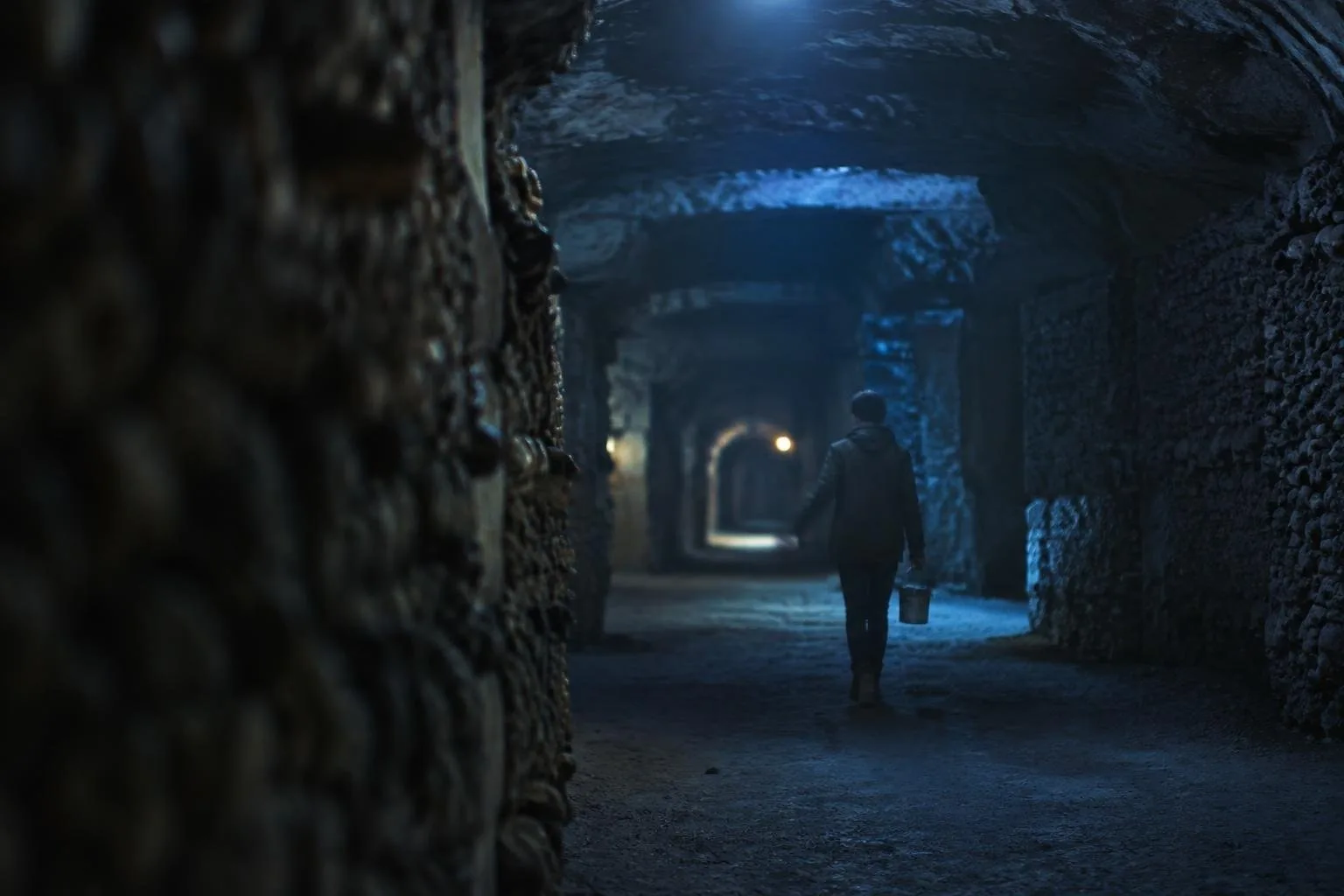
Beneath the bustling streets of Paris, France, lies a network of tunnels known as the Paris Catacombs. While these underground passages are famous for their ossuaries, they also host a peculiar and enduring artistic secret. This hidden cultural practice is maintained by the student body of the School of Mines, an institution with deep historical ties to mining and engineering. The connection between the school and the catacombs is not merely academic; it is rooted in a physical passage that once allowed direct access from the university to the subterranean galleries.
The origins of this tradition trace back to a specific architectural feature known as the “Mines staircase.” Historically, this concealed entrance provided students with a private route into the depths below. Although safety regulations have long since closed this direct portal to prevent unauthorized entry, the spirit of the connection remains alive. Today, the General Inspector of Quarries grants special permission to uphold the artistic rituals associated with this legacy. It is a testament to how institutional memory can survive even when physical access is restricted, transforming a security measure into a curated cultural event.
The Annual Ritual of Sainte-Barbe
The core of this tradition revolves around the celebration of Sainte-Barbe, the patron saint of miners. Observed annually on December 4th, this day marks a significant moment for the engineering community in France. For the students at the School of Mines, it is not just a holiday but a deadline for a creative challenge. Since 1988, each cohort of first-year students has been tasked with producing a single painting that represents their entire class. This requirement transforms the abstract concept of a student group into a tangible visual artifact, preserving their identity within the historic walls of the catacombs.
The creation of these artworks involves collaboration and competition among peers. Each painting serves as a time capsule, capturing the aesthetic sensibilities and collective spirit of a specific generation of engineers. Over nearly four decades, this accumulation of student work has created a unique gallery underground. The tradition emphasizes continuity and belonging, linking current students to those who came before them through a shared artistic endeavor. It is a rare example where educational institutions actively participate in the curation of public heritage sites, albeit in a highly specialized and restricted manner.
Global Echoes of Underground Art
While the Parisian tradition is unique in its specific link to a mining school, the intersection of industrial history and art appears elsewhere in the world. In Nevada, the town of Virginia City boasts a portrait decorated with over 3,000 silver dollars, reflecting the region’s boomtown past. Similarly, in Tokyo, Japan, the Shin-Ōhashi Bridge connects modern infrastructure to historical influence, having been depicted in woodcut prints that inspired Van Gogh.
These examples illustrate a broader human tendency to memorialize labor and landscape through creative means. From the home of Rosa Bonheur in Thomery, France, to the Mining Art Gallery in Bishop Auckland, England, artists have long sought to document the lives of workers. However, the School of Mines’ tradition stands apart due to its location within a protected archaeological site and its strict adherence to a specific calendar date. The ongoing permission granted by quarry inspectors ensures that this niche practice continues without compromising the structural integrity or safety of the catacombs, balancing heritage preservation with living tradition.